
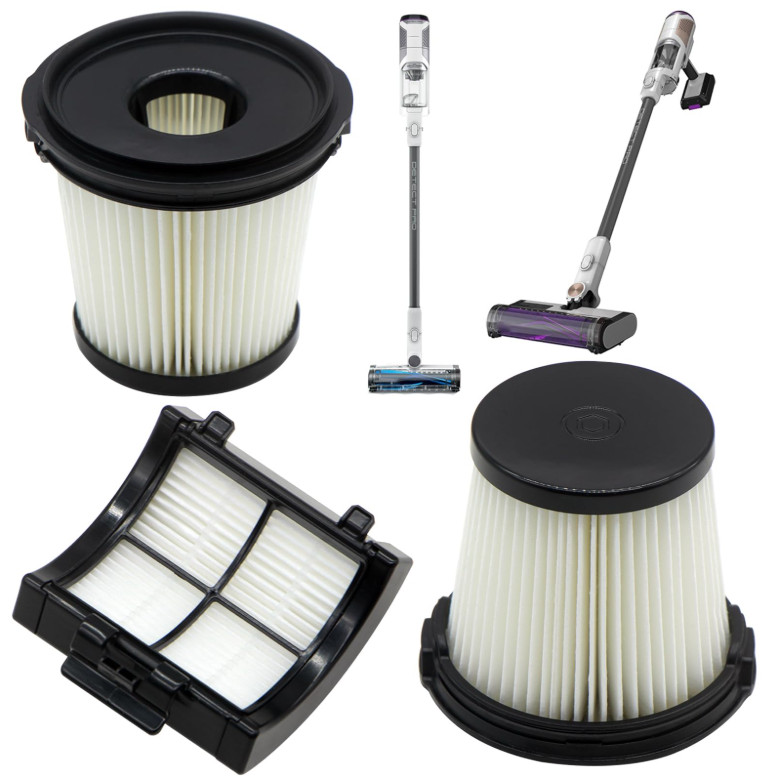
What HEPA Means, Which Models Have It, and Why It Matters
Yes—many Shark vacuums do have HEPA filters, but not every model. This guide explains what HEPA really means, which Shark vacuums include it, how to check your model, and whether HEPA is worth it for allergies and pet homes.
Quick Answer
- Some Shark vacuums include true HEPA filtration (H13-level).
- HEPA works best when paired with Shark’s sealed system, which prevents air leaks.
- Entry-level or compact models may use non-HEPA filtration.
What Is a HEPA Filter (and Why It Matters)?
HEPA (High-Efficiency Particulate Air) filters capture 99.97% of particles as small as 0.3 microns, including:
- Dust mites
- Pollen
- Pet dander
- Fine allergens
If allergies or asthma are concerns, HEPA filtration is a major upgrade over standard filters.
Do All Shark Vacuums Have HEPA Filters?
No. Shark offers three filtration setups:
- True HEPA + Sealed System (Best)
- HEPA without fully sealed system (Good)
- Standard foam/felt filters (Basic)
Only the first option provides maximum allergen containment.
Shark Vacuums That Typically Include HEPA
While exact availability varies by model and year, HEPA is commonly found in:
- Upright and cordless pet-focused models
- Premium cordless lines (e.g., Stratos-class)
- Models marketed for allergies
👉 See current picks:
best Shark vacuum for allergies → /best-shark-vacuum-for-allergies/
How to Check If Your Shark Vacuum Has HEPA
Use this quick checklist:
- Look for “HEPA” printed on the filter or housing
- Check the manual/spec sheet for “HEPA” or “H13”
- Search your exact model number on Shark’s site
- Inspect the exhaust filter location (rear/top housing)
If it says “sealed system with HEPA”, you’re getting the full benefit.
Is a Sealed System Important?
Yes—absolutely.
A HEPA filter alone isn’t enough if air leaks around it.
A sealed system ensures that all air passes through the HEPA filter, not around it—critical for allergy control.
HEPA vs Standard Shark Filters
| Feature | HEPA Filter | Standard Filter |
|---|---|---|
| Captures allergens | ✅ Yes | ❌ Limited |
| Particle capture | 99.97% @ 0.3µm | Larger particles |
| Allergy-friendly | ✅ Excellent | ❌ Moderate |
| Replacement cost | Higher | Lower |
👉 Maintenance matters either way:
how often to clean Shark vacuum → /how-often-to-clean-shark-vacuum/
How to Maintain a Shark HEPA Filter
- Do not wash HEPA filters unless the manual says it’s washable
- Tap gently to remove surface dust
- Replace every 6–12 months (pets/allergies: closer to 6)
👉 Step-by-step care:
how to clean Shark vacuum filter → /how-to-clean-shark-vacuum-filter/
Does HEPA Affect Suction?
No—when clean.
A clogged HEPA filter can reduce suction, but a clean one won’t.
👉 Fix suction issues fast:
does Shark vacuum lose suction → /does-shark-vacuum-lose-suction/
Is a HEPA Shark Vacuum Worth It?
Choose HEPA if you:
- Have allergies or asthma
- Own pets
- Vacuum frequently
- Want better indoor air quality
👉 Compare HEPA-equipped models:
best Shark vacuums → /best-shark-vacuums/
Final Answer: Does a Shark Vacuum Have a HEPA Filter?
Yes—many Shark vacuums include true HEPA filtration, especially allergy- and pet-focused models. For best results, choose a Shark vacuum with both HEPA and a sealed system, and maintain the filter regularly.